























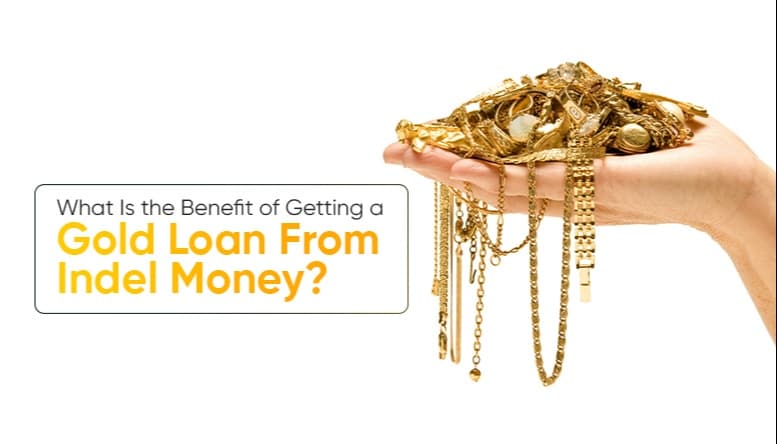





When an urgent monetary need emerges, individuals often find themselves struggling to find the right resources to solve their immediate financial crisis. Two of the most popular options that are considered during the rise of such desperate situations are: the early withdrawal and liquidation of fixed deposits (FDs) or taking a secured loan against gold assets. Even though both these channels can be viewed as possible solutions that deliver quick access to cash. But, securing a gold loan is considered a more tactical and prudent roadmap to harnessing financial liquidity when compared to breaking an FD.
In this blog, Indel Money, one of the most popular Non-Banking Financial Companies (NBFC) in India, explores the reasons why taking a Gold Loan is a better solution than breaking your Fixed Deposit to solve immediate financial requirements.
For the common man, a fixed deposit is viewed as the most safe and reliable financial instrument for long-term wealth creation and assured yields. But, if a fixed deposit is subjected to premature withdrawal prior to its date of maturity, it can give rise to adverse financial outcomes in the long run. Firstly, a penalty for early withdrawal is imposed on the account holder by many banking and financial institutions, this can cause a dent on their return of investment (ROI) and will reduce the final amount they will receive.
Secondly, the initial interest at which the money was deposited will be fully relinquished, and a drastically reduced interest rate that aligns with the shorter period the money was parked as a fixed deposit, will be prioritized by the bank. On top of this, long term financial ambitions will be negatively affected by premature liquidation of a capital base. If an FD that has been existing for a considerably long period of time with high interest rates is prematurely drawn down, a highly viable and reliable mechanism to accumulate wealth is gone forever, especially if the interest rates in the market are at a low during time of liquidation.
Conversely to the withdrawal of a fixed deposit, a gold loan is designed as a safe, secure asset-backed credit facility where the borrower has the right to keep the ownership of the asset. Passive gold assets can be leveraged as collateral to harness monetary liquidity. Since the loan is secured by physical assets that hold inherent and substantial value, the need for levying premium and inflated interest rates in order to mitigate lender risk is completely bypassed.
By opting for a gold loan, the fixed deposit will remain intact and untouched. This allows the investment corpus to generate interest income without any hassles and thus, ensuring that wealth creation is not interrupted or compromised. The borrower’s financial hole will be filled purely by the means of temporary liquidity, and long-term savings shall remain unbroken. Once the debtor pays off the loan in full along with the accumulated interest, the pledged gold will be returned to the owner.
In the vast ecosystem of corporate financing, distinctions are often drawn between regular commercial credit systems and specialized funding structures. When analyzing the difference between loans for Micro, Small, Medium Enterprises and standard business loans, significant variations in operational and structural characteristics become more evident. For entrepreneurs struggling to find a way around these options, organizations such Indel Money have designed specific strategies and frameworks that align with their distinct financial needs.
In this blog, Indel Money, one of the most popular Non-Banking Financial Companies (NBFC) in India, explains what makes small business loans in India different from Regular Business Loans, and what purpose they serve to both entities.
Business loan providers in India set up Normal business loans for reputed corporate houses that generate a substantial turnover every year, can produce multi-year financial statements and records and also possess an extensive, long standing history of credit. In a regular scenario, the eligibility criteria to avail standard commercial loans are often very tight and stringent. It is a process that requires a strong trial of documents and a clean and proven track record of large scale business operations.
On the other hand, MSME loans in India are purposely curated to cater to enterprises with smaller market presence and asset infrastructure. Under the lending policies laid down by most banks and non-banking-financial corporations (NBFCs), the eligibility of an MSME to secure a business loan is governed by government-defined thresholds for investment in plant, machinery and equipment, alongside their annual revenue limit. This structure enables many small business enterprises which might have been disqualified to avail corporate loans or credit facilities due their size or limited operational history to gain access to the capital required for growth.
The primary point of variance between these two financial instruments is how they view and examine security. Most conventional business loans heavily rely on high value collateral to access immediate financial liquidity. In order to secure commercial credit lines, companies resort to pledging corporations that hold high value, and in most cases this can be real estate, heavy industrial machinery or capacious fixed deposits.
In contrast, MSMEs funding is mostly structured with flexible and lenient collateral requirements in order to stonewall small businesses being pushed out of the market. At Indel Money specific loan products, including gold loans for funding business ambitions are leveraged for the same purpose. By employing gold assets as security, the need for comprehensive property examinations and exhaustive asset audits are completely eliminated. This unique approach allows small business owners to lay their hands on capital according to their readily available assets rather than vast corporate portfolios.
Due to the large amount of funds involved, the administrative pathway that is required to harness conventional commercial capital is extremely complex and notoriously painstaking, regular business enterprises go through multiple processes right from underwriting, risk management, and long standing legal verifications. As a result, a lot of time can pass by between the approval and the final release of the loan amount.
Since financial crunch is a common occurrence in small scale businesses, MSME loans are designed for quick delivery and instant access, and processing mechanisms at Indel Money are engineered and streamlined to ensure the prompt release of funds without excessive delays. When a loan backed by gold is utilized by MSMEs, the processing pipeline from valuation to approval can be done within a few hours, and thus allowing small scale businesses fulfil running costs, minimize inventory shortages, and harness the next best growth opportunity without the bottlenecks and obstacles associated with a traditional corporate loan.
Small businesses often rely on external capital to level up their operational efficiency, boost market expansion, fulfill short term funding requirements, or streamline capital disbursement. But, watertight eligibility norms and stringent credit analysis are often faced by Micro, Small and Medium Enterprises (MSMEs) when they approach conventional banking institutions and non-financial-banking companies to avail a business loan. Therefore, in order to expedite this process and boost the possibility of loan approval, business owners must curate customized action plans and specialized strategies. They must implement robust, data driven frameworks, especially the ones that align with dedicated non-banking financial companies (NBFCS) can greatly enhance the venture’s credit portfolio.
In this blog, Indel Money, one of most popular and reputed Non-Banking Financial Companies (NBFC) in India gives insights into how micro, small and medium (MSME) enterprises can gain approval to harness financial capital via business loans in India
During the processing period of a small business loan application that is given by MSMEs, a critical examination of their financial statements and records is conducted to determine their credit health and financial reliability. Spotless accounting and bookkeeping practices must be maintained by small business enterprises to showcase strong profit margins and stable cash flow. Banks, financial institutions and money lenders often prioritize sustainable financial growth over asset-backed securities. This strategy gives the assurance that short term fiscal obligations can be fulfilled by the borrower without any major delays or bottlenecks. When the records are maintained systematically, the financial standing of the company can be substantiated effectively, which can be instrumental in reducing the probability of business loan rejection during the initial evaluation period.
When small businesses require substantial capital to leverage growth and scale exponentially, they present tangible assets as security to the banks and other financial institutions. When corporate assets are pledged they significantly reduce the overall risks and uncertainties borne by the lender. As a matter of fact, loans against property, gold and other high value assets are actively capitalized by business owners to get the best value out of their idle assets and investments. Therefore, if high quality, top-notch collaterals are presented, the borrowers can expedite processing speeds and also unlock lucrative lending opportunities that align with their future business objectives and growth strategies.
The most common mistake small businesses make is applying for standard loans that are not in sync with their operational goals and ambitions. So, instead of going for generic funding methodologies, they must focus on harnessing capital through customized financial products such as systematic, structured loans and short term lending options in order to align with the exact time of financial needs and deployment. By banking on customized structures that deliver daily or weekly repayment schedules and principal moratoriums for a fixed period of time, small and medium sized businesses can manage their cash flow more efficiently and effectively. When the credit facility profile of a business tallies with its overall annual revenue, it minimizes risk profile to a greater extent and is favoured by banks and non-banking financial institutions (NBFCs)
Managing debt has become increasingly challenging for many individuals and families. Whether it is a medical emergency, educational expense, business requirement, or unexpected financial obligation, people often turn to credit cards, personal loans, or informal borrowing to meet immediate cash needs. While these options may provide quick access to funds, they often come with high interest rates that can create a cycle of debt that becomes difficult to escape.
In such situations, gold loans have emerged as a practical and affordable financing option. India has a long-standing tradition of investing in gold, and many households possess gold jewelry or ornaments that can serve as valuable financial assets. Instead of accumulating expensive debt through credit cards or unsecured loans, borrowers can leverage their gold to obtain funds quickly and efficiently.
For individuals looking for the Best gold loan company in India, understanding how gold loans work and how they can help manage debt is an important first step toward making informed financial decisions.
High-interest debt refers to loans or credit facilities that charge significantly higher interest rates compared to secured borrowing options. Common examples include:
Credit card balances
Payday loans
Informal borrowing from private lenders
Certain personal loans
Overdraft facilities
The main problem with high-interest debt is that a substantial portion of repayments goes toward interest rather than reducing the principal amount. Over time, this can lead to financial stress and increased repayment burdens.
For example, carrying a large credit card balance for several months can result in significant interest accumulation. Missing payments can further increase costs through penalties and additional charges.
This is where alternative financing solutions like gold loans can make a meaningful difference.
A gold loan is a secured loan in which borrowers pledge their gold jewelry as collateral in exchange for funds. The lender assesses the purity and weight of the gold and offers a loan based on its market value.
Once the loan amount is sanctioned, the borrower receives the funds and can use them for any legitimate purpose. After repaying the loan according to the agreed terms, the pledged gold is returned.
Gold loans have become popular because they offer:
Quick approval
Minimal documentation
Competitive interest rates
Flexible repayment options
Access to funds without selling valuable assets
One of the biggest advantages of a gold loan is that it is a secured borrowing option. Since the lender holds gold as collateral, the risk involved is lower compared to unsecured loans.
This reduced risk often translates into:
Secured loans generally carry lower interest rates than unsecured alternatives. This means borrowers pay less in interest over the loan tenure, reducing the overall cost of borrowing.
Many borrowers struggling with high-interest debt may have lower credit scores due to previous repayment challenges. Gold loans primarily depend on the value of the pledged gold rather than extensive credit assessments.
Financial emergencies often require immediate solutions. Gold loans can typically be processed much faster than traditional personal loans, allowing borrowers to address urgent needs without delay.
Debt consolidation involves combining multiple debts into a single loan with more manageable repayment terms.
Consider a borrower dealing with:
Outstanding credit card balances
Personal loan obligations
Short-term borrowing from friends or private lenders
Managing multiple payments can become overwhelming. Different due dates, varying interest rates, and growing penalties can add significant financial pressure.
A gold loan can provide funds to clear these high-interest obligations. Instead of managing several debts, the borrower focuses on repaying a single loan that may have a lower overall borrowing cost.
Benefits of debt consolidation through a gold loan include:
Simplified repayment structure
Reduced monthly financial stress
Lower interest burden
Better budgeting and financial planning
Credit cards are convenient financial tools, but they can become expensive when balances are carried forward month after month.
Many borrowers only make minimum payments, believing they are managing their obligations effectively. However, this often results in interest accumulating on the remaining balance.
A gold loan can help borrowers:
Clear outstanding credit card balances
Avoid compounding interest charges
Prevent late payment penalties
Improve overall financial stability
By replacing revolving high-interest debt with a structured repayment plan, borrowers gain greater control over their finances.
Gold loans have become one of the most reliable and accessible ways to meet urgent financial needs. Whether it’s for personal expenses, business requirements, or emergencies, they offer quick liquidity with minimal documentation.
However, while the process is simple, getting the best deal requires smart planning. Understanding gold loan interest rates and the factors that influence them can help you secure a loan at a much lower cost.
A gold loan is a secured loan where you pledge your gold jewelry as collateral. Since it is backed by a valuable asset, lenders generally offer better interest rates compared to unsecured loans. Still, not all borrowers get the lowest rates, this depends on several important factors.
Selecting the right lender is one of the most important steps. Banks, non-banking financial companies, and other financial institutions all offer gold loans, but their terms can vary widely.
Banks often provide lower interest rates but may have stricter requirements. On the other hand, NBFCs usually offer faster processing and flexible terms, though sometimes at slightly higher rates.
Choosing a right lender like Indel Money can help you find the best balance between affordability and convenience.
The quality of your gold plays a major role in determining the loan value and interest rate. Higher purity gold, such as 22K or above, is more valuable and can help you secure better terms.
If your jewelry is hallmarked, it increases credibility and ensures a smoother evaluation process. Lower purity gold may reduce your loan eligibility and lead to less favorable conditions.
Lenders usually offer a percentage of your gold’s market value as a loan. While it might be tempting to take the maximum amount available, borrowing less can actually work in your favor.
A lower loan amount reduces the lender’s risk, which may result in better interest rates. It also makes repayment easier and lowers the overall financial burden.
Choosing only what you truly need is always a smarter financial decision.
Loan tenure directly impacts the total interest you pay. Shorter tenures typically come with lower interest rates and reduced overall costs.
If you have a steady income and are confident about repayment, opting for a shorter duration can save you a significant amount of money.
It also allows you to close the loan faster and reclaim your gold without unnecessary delays.
Gold loans come with flexible repayment structures. Some lenders offer EMI options, while others allow interest-only payments during the loan period with principal repayment at the end.
Choosing the right repayment plan depends on your financial situation. If you have a regular income, EMI payments may work best. If your income is irregular, a bullet repayment option might be more suitable.
Understanding these options helps you manage your finances better and avoid unnecessary stress.
In times of financial need, whether it is for education, medical emergencies, business expansion, or personal goals, many Indians turn to gold loans as a reliable and quick source of funds. Gold has always been a trusted asset in Indian households, and a gold loan allows you to unlock its value without selling it. It is fast, simple, and requires minimal documentation.
However, choosing the right gold loan company is just as important as deciding to take the loan itself. The lender you select can affect your interest cost, the safety of your gold, repayment flexibility, and overall borrowing experience. With many banks and NBFCs offering similar services, making the right choice requires careful evaluation.
This guide will help you understand what to look for in a gold loan provider and how a trusted company like Indel Money can support your financial needs with confidence.
A gold loan is a secured loan where you pledge your gold jewellery as collateral in exchange for money. The lender evaluates the purity and weight of your gold and offers a loan amount based on a percentage of its value. Once you repay the loan along with interest, your gold is returned safely.
Because the loan is backed by collateral, approval is usually quick and documentation is minimal. This makes gold loans far more accessible than personal loans or credit cards. But the terms, service quality, and charges vary from lender to lender, which is why choosing wisely matters.
The first and most important step is ensuring the company is registered with the Reserve Bank of India. RBI-registered lenders follow strict rules regarding interest rates, valuation, and customer protection. This reduces the risk of hidden practices and gives you greater security.
Indel Money operates as an RBI-registered Non-Banking Financial Company, which means it adheres to regulatory guidelines and maintains professional standards. This adds credibility and trust to your borrowing experience.
Interest rates directly affect how much you repay. While many lenders advertise low rates, some may include hidden fees such as processing charges, valuation fees, renewal fees, or penalties.
Always ask for a complete breakdown of:
Interest rate
Processing charges
Prepayment or foreclosure penalties
Additional service costs
Transparent lenders clearly explain all charges upfront. Indel Money focuses on competitive and transparent pricing so borrowers know exactly what they are paying.
The loan-to-value ratio determines how much money you receive against your gold. A higher ratio means you can access more funds from the same jewellery. However, this must still comply with RBI limits.
A good gold loan company will offer fair and accurate valuation of your gold and maximize your eligible loan amount. Proper assessment ensures you receive the best value without undervaluation or unnecessary deductions.
One of the biggest advantages of a gold loan is speed. When you need funds urgently, waiting days for approval can be stressful. The right lender should offer quick evaluation and same-day disbursal.
Indel Money is known for fast processing, enabling customers to receive funds quickly, often within hours. This makes it especially useful during emergencies or short-term financial gaps.
Financial situations differ for everyone. Some borrowers prefer monthly EMI payments, while others may want bullet repayment at the end of the tenure. Flexible repayment options can ease pressure and make repayment smoother.
Look for features like:
Multiple tenure choices
EMI or interest-only options
Part-payment flexibility
No heavy prepayment penalties
Indel Money provides flexible repayment structures that allow borrowers to choose what suits their income pattern and comfort level.
Whether you need funds for a medical emergency, education, business expansion, or any unexpected expense, borrowing money is an important financial choice. Two of the most common options available in India are personal loan and gold loan in India. Each has its own advantages and potential drawbacks, and the right choice for you can make a big difference in your financial health.
At Indel Money, we believe informed decisions lead to better financial outcomes. This comparison will help you understand which option, gold loan or personal loan, is better suited for your needs.
A gold loan is a secured loan where you pledge your gold jewellery or coins as collateral with a lender in exchange for funds. The value of the loan depends on the purity and weight of the gold you offer.
Because the loan is backed by a tangible asset, lenders often provide higher loan amounts with comparatively lower interest rates. You retain ownership of your gold, and it is returned to you once the loan is repaid in full.
A personal loan is an unsecured loan, which means it does not require any collateral. The lender approves the loan based on your credit score, income stability, and repayment capacity.
Personal loans offer flexibility in usage. You can use them for virtually any purpose. However, since there is no asset securing the loan, interest rates tend to be higher than secured loans like gold loans.
One of the biggest differences between gold loans and personal loans lies in the interest rate.
Gold loans generally offer lower interest rates because they are secured by gold. This reduces the lender’s risk and allows them to provide more affordable borrowing options.
Personal loans come with higher interest rates since they are unsecured. Lenders price in the additional risk, which can increase the overall cost of borrowing.
Gold loans are sanctioned based on the value of the gold pledged, usually up to a certain percentage of the current market value. If you own gold, you may be eligible for a substantial loan with minimal documentation.
Personal loans depend heavily on your credit score, income level, and financial history. Even borrowers with strong credit profiles may face limits on the loan amount.
Gold loans are often processed faster, as the approval is primarily based on the valuation of gold. In many cases, funds can be disbursed on the same day.
Personal loans require income verification and credit checks, which can extend the approval process, especially if documentation needs review.
Both gold loans and personal loans offer flexibility in how the funds are used. However, personal loans are generally perceived as more flexible, as they do not involve collateral or restrictions related to pledged assets.
Timely repayment of both gold loans and personal loans can support a healthy credit score. On the other hand, missed payments or defaults on either type of loan can negatively affect your credit profile.
With a gold loan, failure to repay may result in the lender selling the pledged gold to recover the outstanding amount. This makes repayment discipline especially important.
Personal loans do not put physical assets at risk, but defaults can still lead to legal action and long-term damage to your credit score.